Status of disability in Kenya: Statistics from the 2019 census
Demographics and intercensal comparison
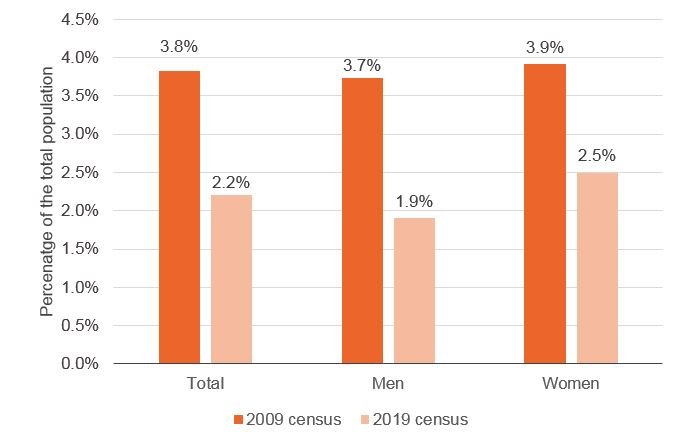
According to the 2019 census, 2.2% (0.9 million people) of Kenyans live with some form of disability. Direct comparison of disability prevalence in 2009 and 2019 is problematic due to differences in data collection methodologies, ages covered, and the size of administrative units. The 2019 census appears to show a sharp drop in disability prevalence; the 2009 census states 3.5%, but when looking at the same age threshold (i.e. adults and children above five years of age) the 2009 disability prevalence rate was 3.8%. The 2019 census indicates that 1.9% of men have a disability compared with 2.5% of women. For comparison, the 2009 census reported 3.4% of men and 3.5% of women had a disability; again, when looking at the same age threshold (i.e. adults and children above five years of age), 3.7% of men and 3.9% of women had a disability (Figure 2).[7] There are more people with disabilities living in rural than urban areas. Analysis of prevalence rates by residence shows 2.6% (0.7 million) of people in rural areas and 1.4% (0.2 million) of people in urban areas have a disability. The 2009 census reports 3.8% of rural populations and 3.1% of urban populations had a disability (Figure 2).
Figure 2. Intercensal comparison of disability prevalence rates by gender
Disability by domain
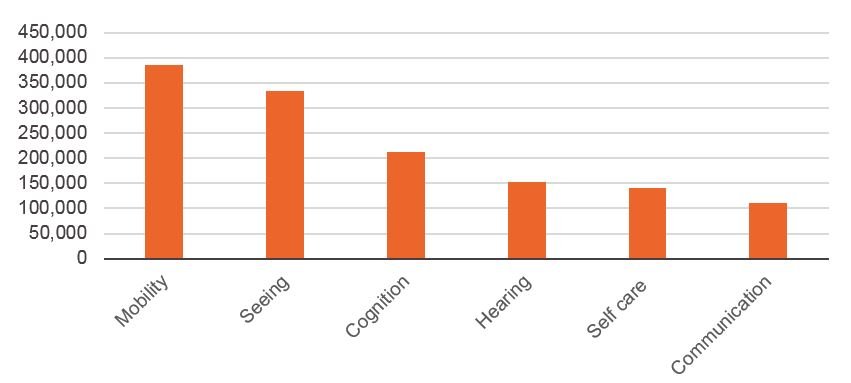
Analysis of disability by domain reveals that mobility is the most commonly reported difficulty, experienced by 0.4 million Kenyans and representing 42% of people with disabilities. The other domains of disability – seeing, hearing, cognition, self-care, and communication – are experienced by between 36% and 12% of people with disabilities. Albinism is a condition experienced by 0.02% of Kenya’s population (Figure 3).
Figure 3. Numbers of Kenyan people disability, by domain
National and subnational prevalence rates
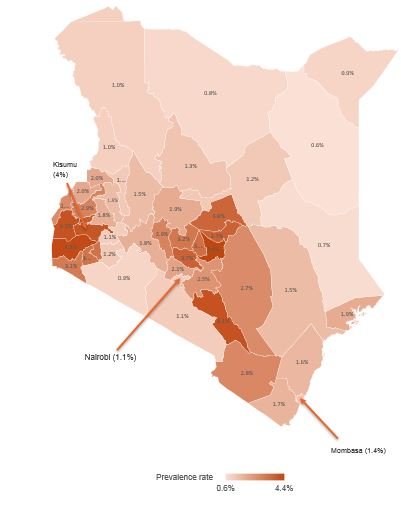
Subnational analysis of the national disability rate of 2.2% reveals a divergence in disability prevalence rates across counties (Figure 4). The highest prevalence rates of disability were recorded in central, eastern, and western parts of Kenya. Embu county (4.4%) has the highest prevalence rate, followed by Homa Bay (4.3%), Makueni (4.1%), Siaya (4.1%), and Kisumu counties (4%). Counties with the lowest disability prevalence rates are found in the north eastern part of Kenya and Nairobi. Wajir has the lowest, with 0.6%.
Figure 4. Distribution of adults and children above five years of age by disability prevalence rate
Disability domains at national and subnational levels
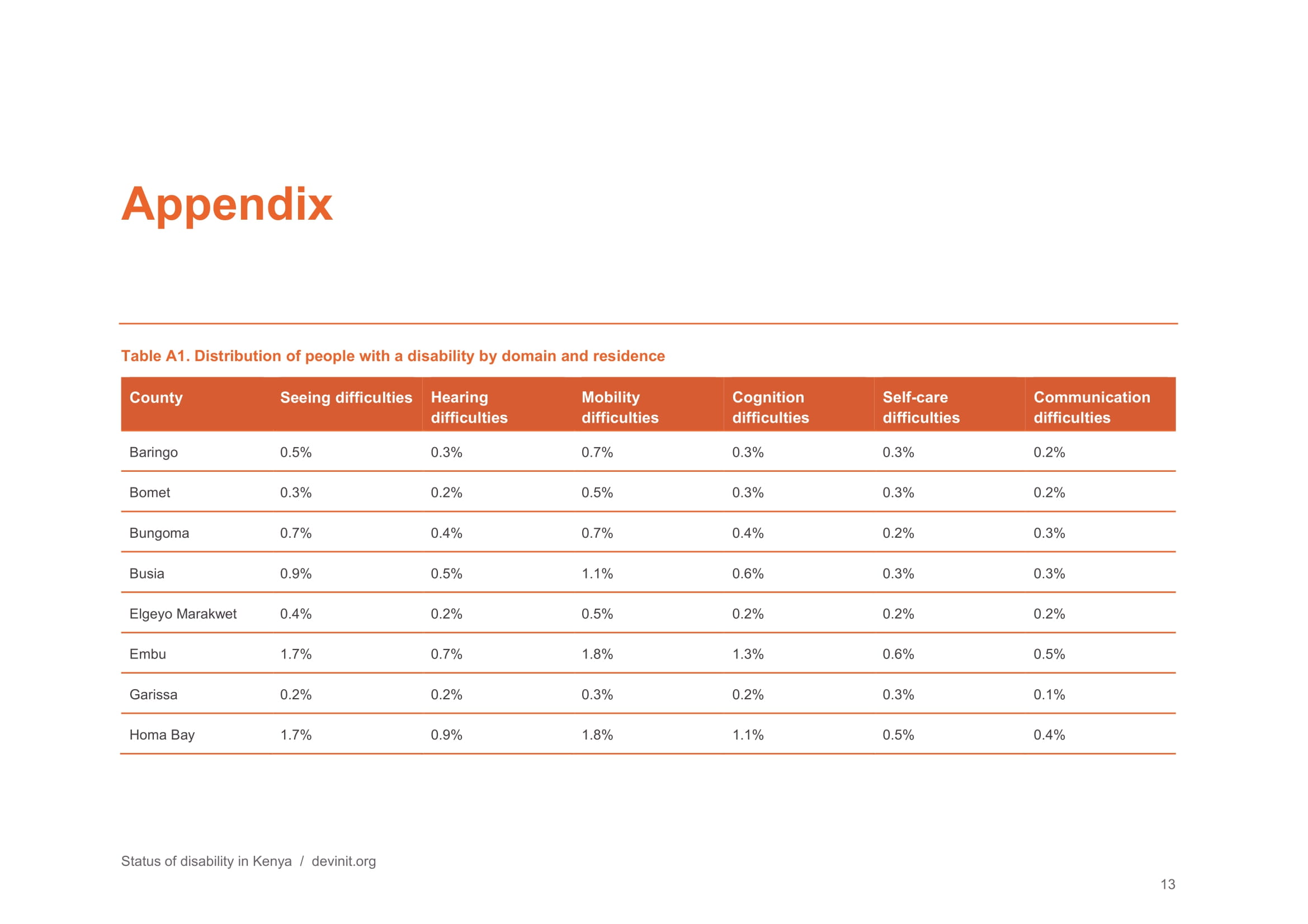
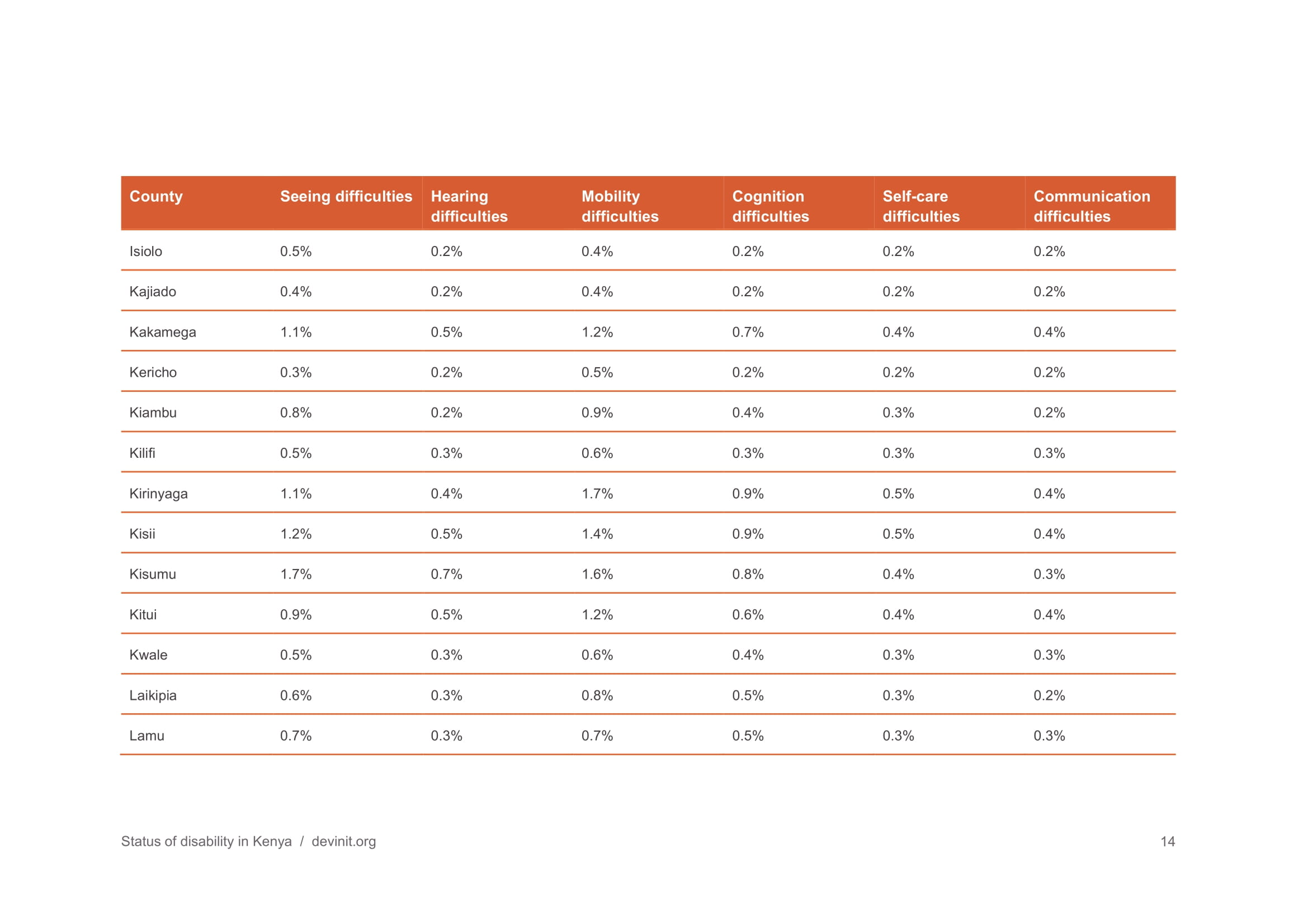
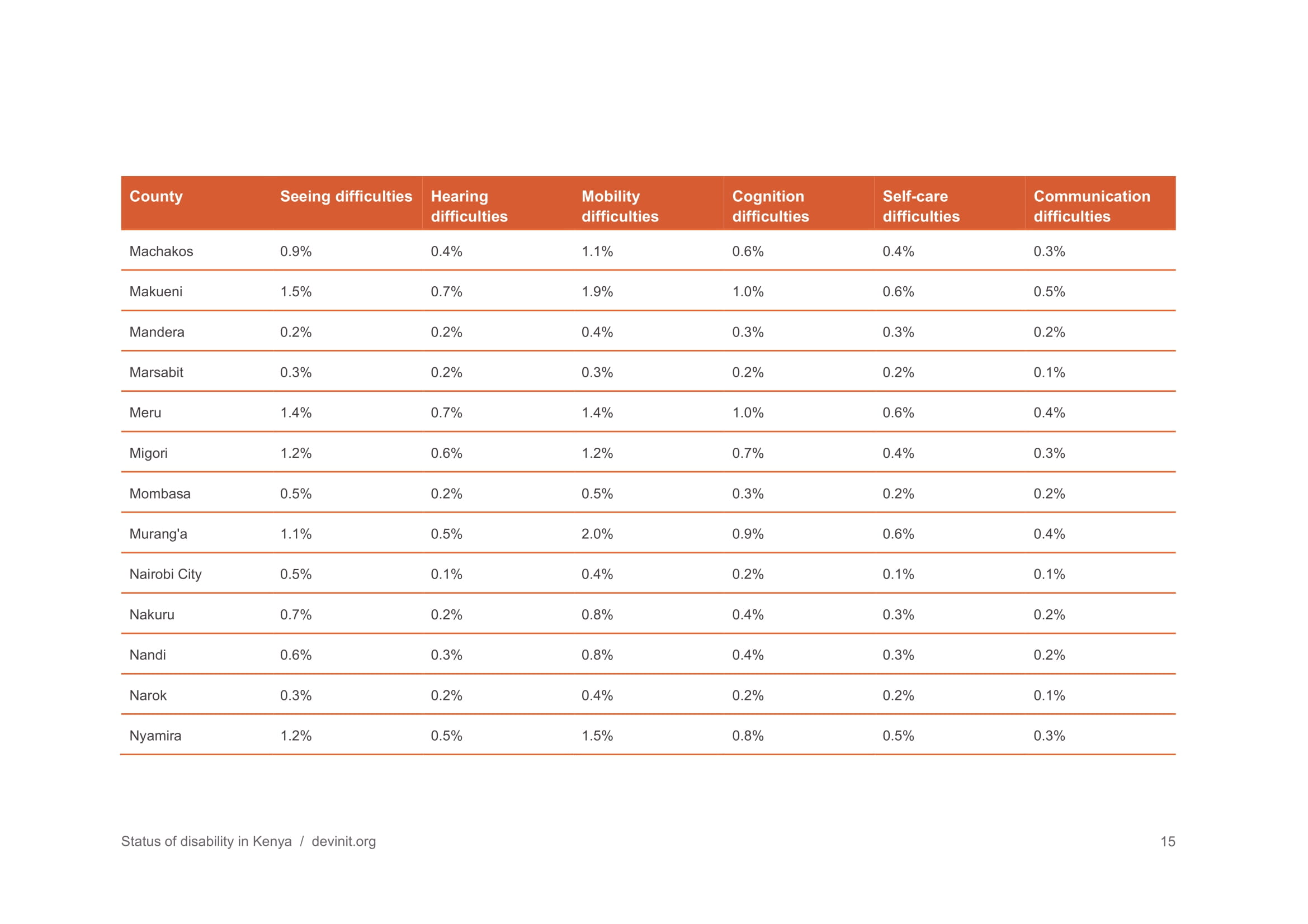
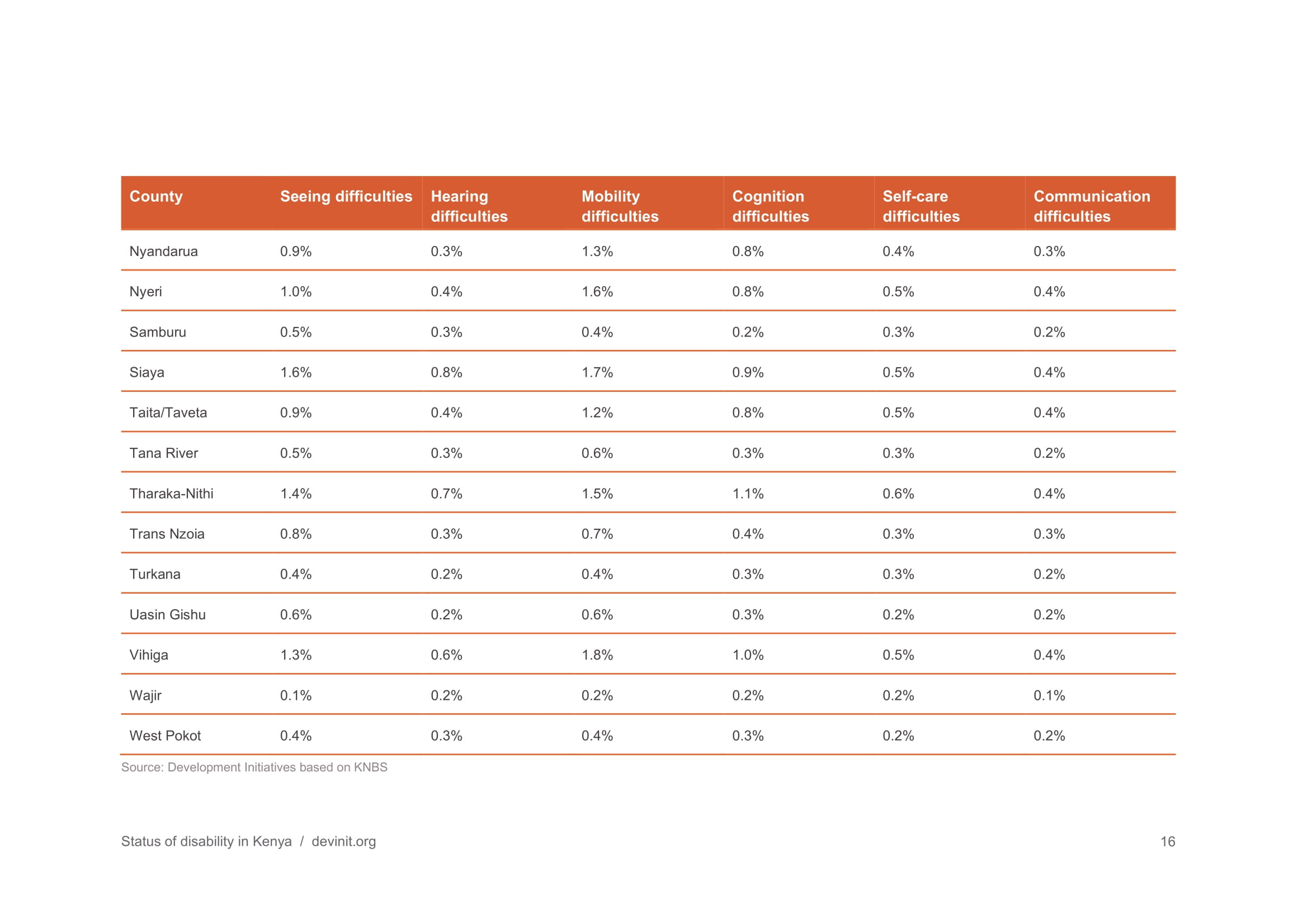
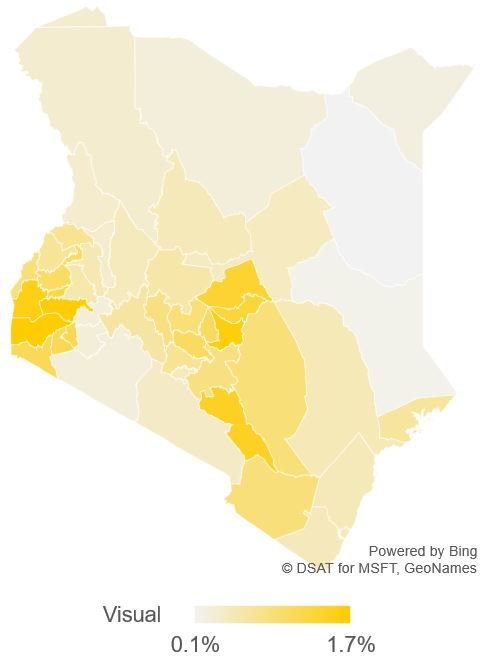
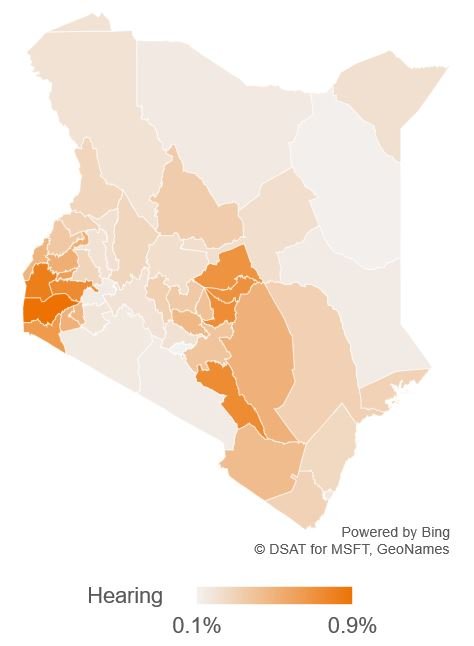
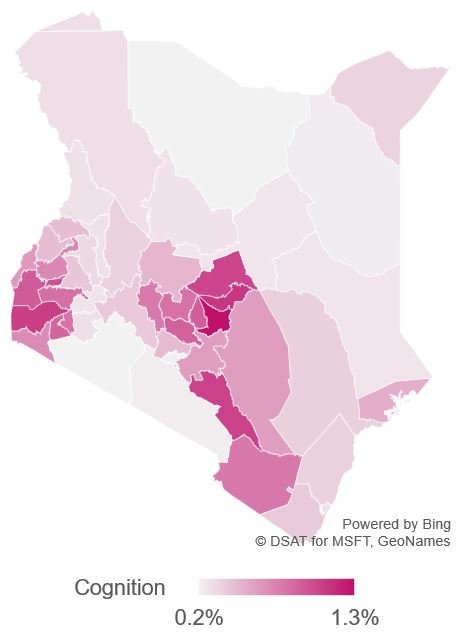
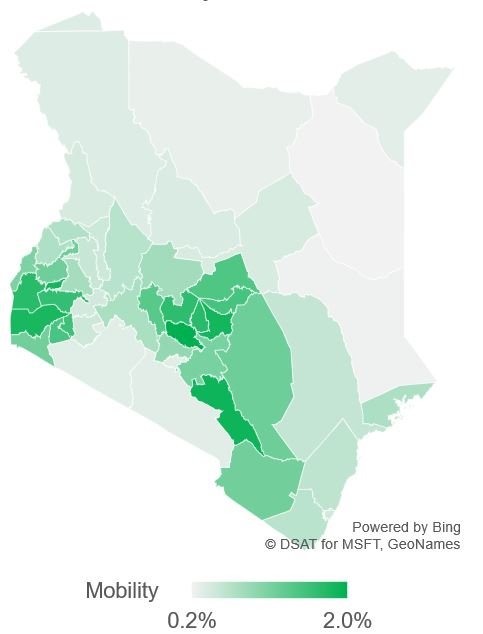
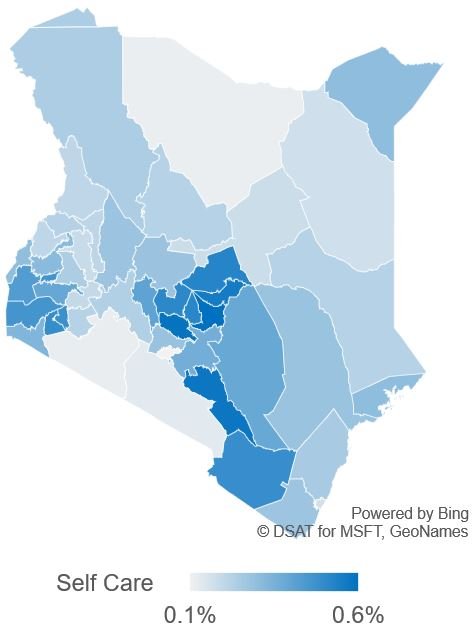
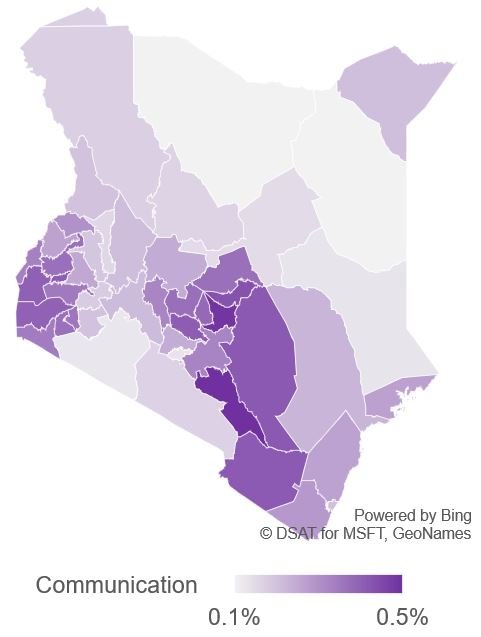
These geographical trends are mirrored when disaggregating disability domains by county. Prevalence rates of people with visual difficulties range between 1.7% and 0.1%, hearing difficulties from 0.9% to 0.1%, mobility difficulties from 2.0% to 0.2%, cognitive difficulties from 1.3% to 0.2%, self-care difficulties from 0.6% to 0.1%, and communication difficulties from 0.5% to 0.1%. Table A1 in the appendix disaggregates prevalence rates by disability domain in all 47 counties.
Figure 5. Distribution of people with disability by domain and residence
Seeing difficulties
Hearing difficulties
Cognition difficulties
Mobility difficulties
Self-care difficulties
Communication difficulties
Unpacking Kenya’s disability statistics
The World Health Organization estimates a global disability prevalence rate of 15%. The prevalence rate provided in the 2009 Kenyan census was much lower than this global figure, at 3.5%. Despite the use of UN-recommended disability questions and efforts to ensure accurate application of the methodology, the 2019 prevalence rate was still low at 2.2%. There are a number of possible reasons for the low prevalence rate in the 2019 census:
- Stigma associated with acknowledging disability might have prevented accurate reporting. The phrasing of the disability questions followed international standards, and enumerators were trained to use the correct terminology, so prejudices that could have arisen through use of stigmatised terms such as ‘disability’ or ‘impairment’ should have been avoided. Without further investigation it is not possible to identify the extent to which stigma about disability impacted the 2019 census results, and mitigating against such a widespread and embedded issue may have been unavoidable.
- The translation of disability questions into local languages may have caused inaccuracies. While conveying the contents of the census survey into Kenya’s local languages, issues of contextualisation, cultural nuances and variation of concepts may have arisen. The translated questions may have lacked the purposeful sensitive phrasing of the English version, unintentionally creating a sense of stigma around the questions that could have impacted the accuracy of survey responses.
- The inclusion of a question on albinism may have impacted the response. Although it is not a functional disability, a question on albinism was included within the section on ‘information on persons with difficulties in doing activities in daily life’ and may have impacted the findings. Albinism is a condition associated with significant stigma and superstition in Kenya, and so mentioning it alongside functional difficulties may have impaired the impartiality intended by the Washington Group Questions. The question was asked after the six questions on functional difficulty, so it may not have prejudiced the response to the same extent as it could have done if asked beforehand.
- The inclusion of ‘Don’t know’ as a response within the functional difficulty questions may have had an impact. This is not standard practice for the Washington Group Questions. It is not clear how these respondents have been treated within KNBS’ census volumes, however it is possible that the inclusion of ‘Don’t know’ as a choice could have lowered the reported disability prevalence rate.[8]
- Exclusion of children under five years of age in the 2019 census may have had some impact on the findings. It is unlikely, however, that this had a significant impact, as demonstrated when comparing 2019 rates with data on adults and children above five years of age extracted from the 2009 census. Diagnosing disability in a child is problematic as they experience continuous change in their ability to perform activities and development milestones are reached at different ages. The Washington Group Short Set of Questions are not intended for use with children.[9]
- Kenya’s population may have lower than average rates of disability. Disability prevalence increases with age, and so countries with large aging populations will have higher prevalence rates. Kenya has a young population and so could have lower disability prevalence rates than some other countries.
Implications of Kenya’s disability statistics
The inclusion of the Washington Group Questions in the 2019 census shows positive intentions towards accurate disability measurement in Kenya. The use of the Washington Group Questions has provided a framework for future censuses in Kenya, allowing comparability across timeframes and locations. While the low reported prevalence rates raise questions about whether the figures represent the reality, there are no clear answers as to why such a high proportion of disabilities appear to be missing from the disability statistics. A deeper analysis of socioeconomic and demographic characteristics and trends (enabled by the future release of census microdata) may help shed light on this issue. The impact of the potentially dramatic underrepresentation of people with disabilities in the official statistics is severe: if the statistics are not accurate, yet are broadly accepted, the focus on disability inclusion will not receive significant attention on Kenya’s political agenda. It may also have a damaging impact on the inclusiveness of Kenya’s response to coronavirus. Underestimating the scale of disability prevalence in Kenya will negatively impact the accurate design of policies and programs targeted towards meeting the needs of people with disabilities. Efforts to include people with disabilities in employment, education, and healthcare will fall short of meeting needs, and the level of funding allocated to these programs will be inadequate. At a time of global economic downturn when substantial declines are also expected in aid budgets[10], it is critical that accurate data is available to ensure the rights and dignity of people with disabilities. To address these concerns, discourse must be developed on what can be done to improve the accuracy of Kenya’s disability data. The leadership of people with disabilities and the organizations that represent them is critical to ensure that the challenges experienced with the 2019 census are fully recognized and accounted for and that Kenya’s statistics on disability leave no one behind.